
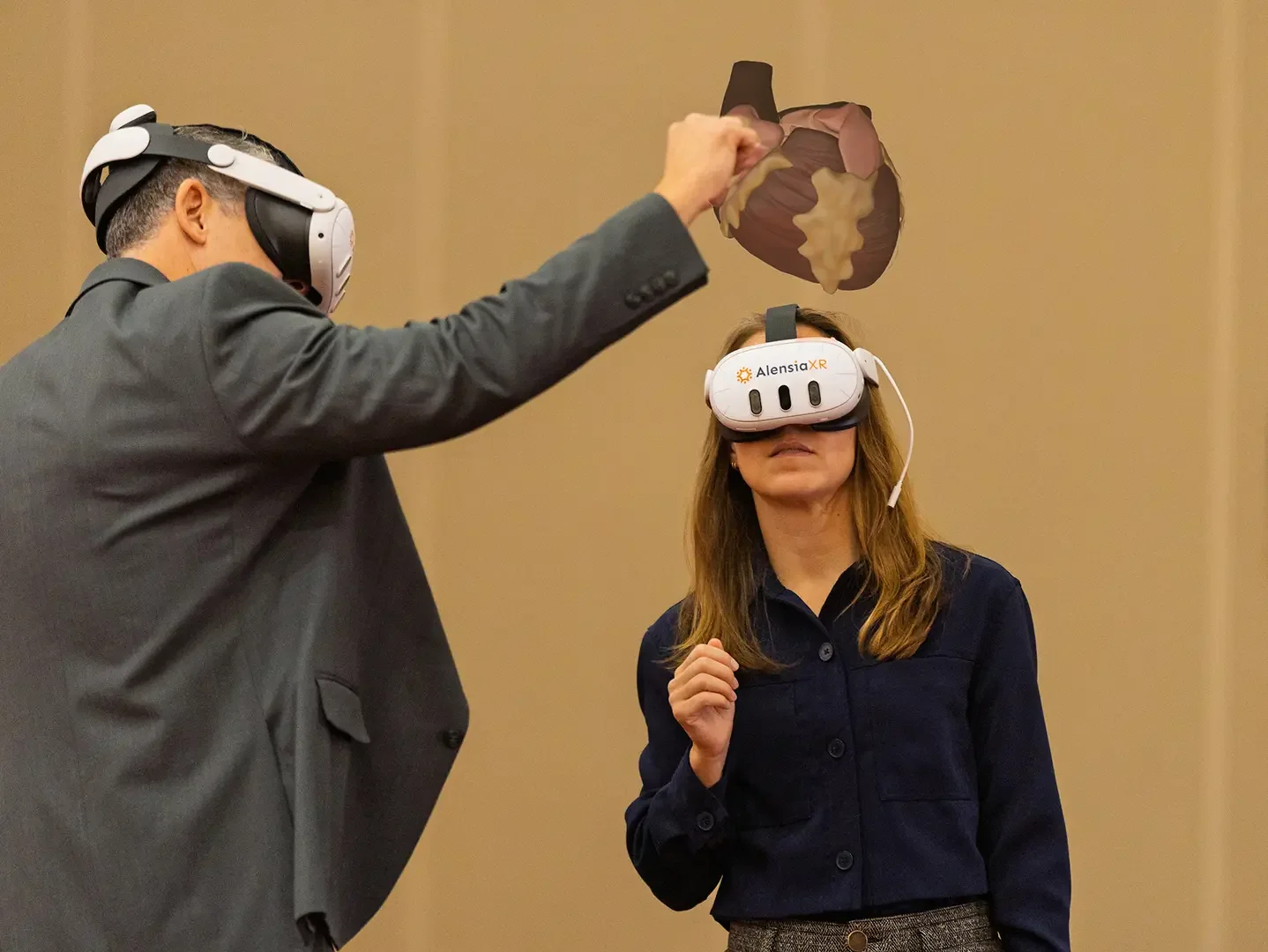
Valparaiso University Is Shaping the Future of Anatomy Learning with 3D Anatomy Software
Valparaiso University’s anatomy showcase demonstrated how mixed reality and 3D anatomy software improve clarity and retention in health sciences education, drawing strong faculty engagement and regional media attention as the university explores expanded XR integration.

Case Study: Duquesne University Modernizes Osteopathic Anatomy Education with 3D Anatomy Software
Duquesne University modernized anatomy education using HoloAnatomy, a virtual anatomy lab and 3D anatomy software that builds student confidence and skill.
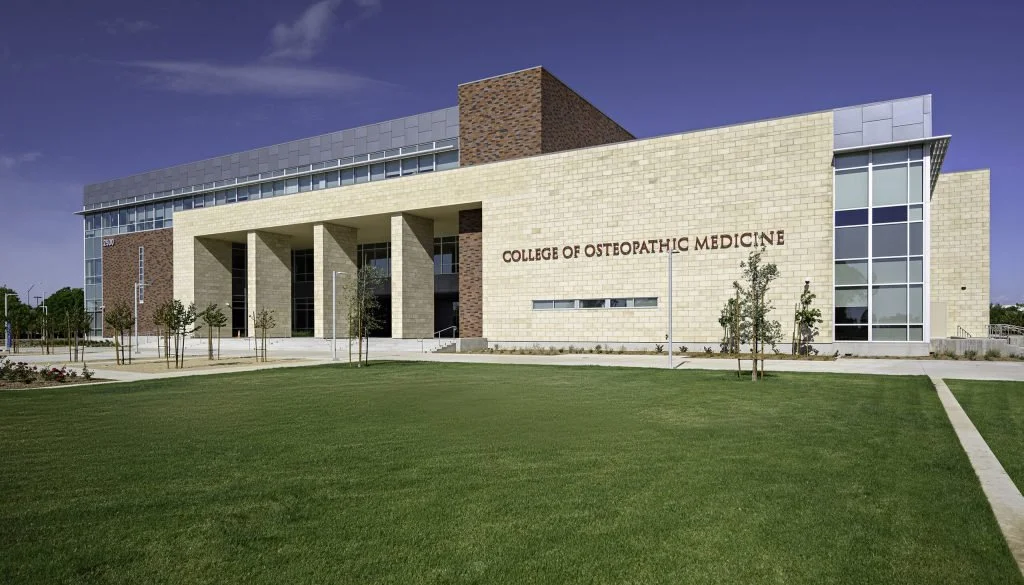
Case Study: How CHSU Modernized Anatomy Education with 3D Anatomy Software
CHSU College of Osteopathic Medicine redefines anatomy education with HoloAnatomy®, a virtual anatomy lab using 3D anatomy software and mixed-reality learning.

Valparaiso University students learning anatomy with the help of mixed reality
The Times of Northwest Indiana recently featured Valparaiso University’s use of HoloAnatomy® in anatomy education, highlighting how students in the Physician Assistant program are learning human anatomy through interactive holographic visualization.

Case Study: CWRU School of Dental Medicine Brings Anatomy to Life with HoloAnatomy®
At Case Western Reserve University’s School of Dental Medicine, students face the challenge of mastering anatomy for clinical procedures in just four years. HoloAnatomy®, an immersive 3D anatomy software, complements cadaver study with a virtual anatomy lab that strengthens spatial understanding and clinical confidence.

Case Study: TCU Uses 3D Anatomy to Teach Human Body
Discover how the Burnett School of Medicine at Texas Christian University blends cadaver labs with immersive 3D learning to give students a clearer, more engaging view of the human body.

Case Study: XR in the Classroom for Smarter Human Anatomy Training at FLCC
At Finger Lakes Community College, Professor Christine Parker introduced the HoloAnatomy® mixed reality platform to overcome barriers like limited lab access and tight student schedules. With immersive 3D models and collaborative learning, students showed higher engagement, stronger performance, and better retention, proving that XR can transform anatomy education, even on a budget.

Case Study: Transforming Neuroanatomy Education at Kansas College of Osteopathic Medicine
Discover how Kansas College of Osteopathic Medicine (KansasCOM) is revolutionizing neuroanatomy education with HoloAnatomy® Neuro. By embracing advanced immersive technology, KansasCOM enables students to explore the central nervous system like never before, making the invisible visible. Learn how teamwork, innovative teaching solutions, and a commitment to cadaverless education are shaping the future of osteopathic training at KansasCOM.
Partner Story: Kansas College of Osteopathic Medicine
Discover how Kansas College of Osteopathic Medicine (KansasCOM) is revolutionizing neuroanatomy education with HoloAnatomy® Neuro Suite in this interview with Dr. Cameron Jeter. By embracing advanced immersive technology, KansasCOM enables students to explore the central nervous system like never before, making the invisible visible. Learn how teamwork, innovative teaching solutions, and a commitment to cadaverless education are shaping the future of osteopathic training at KansasCOM.
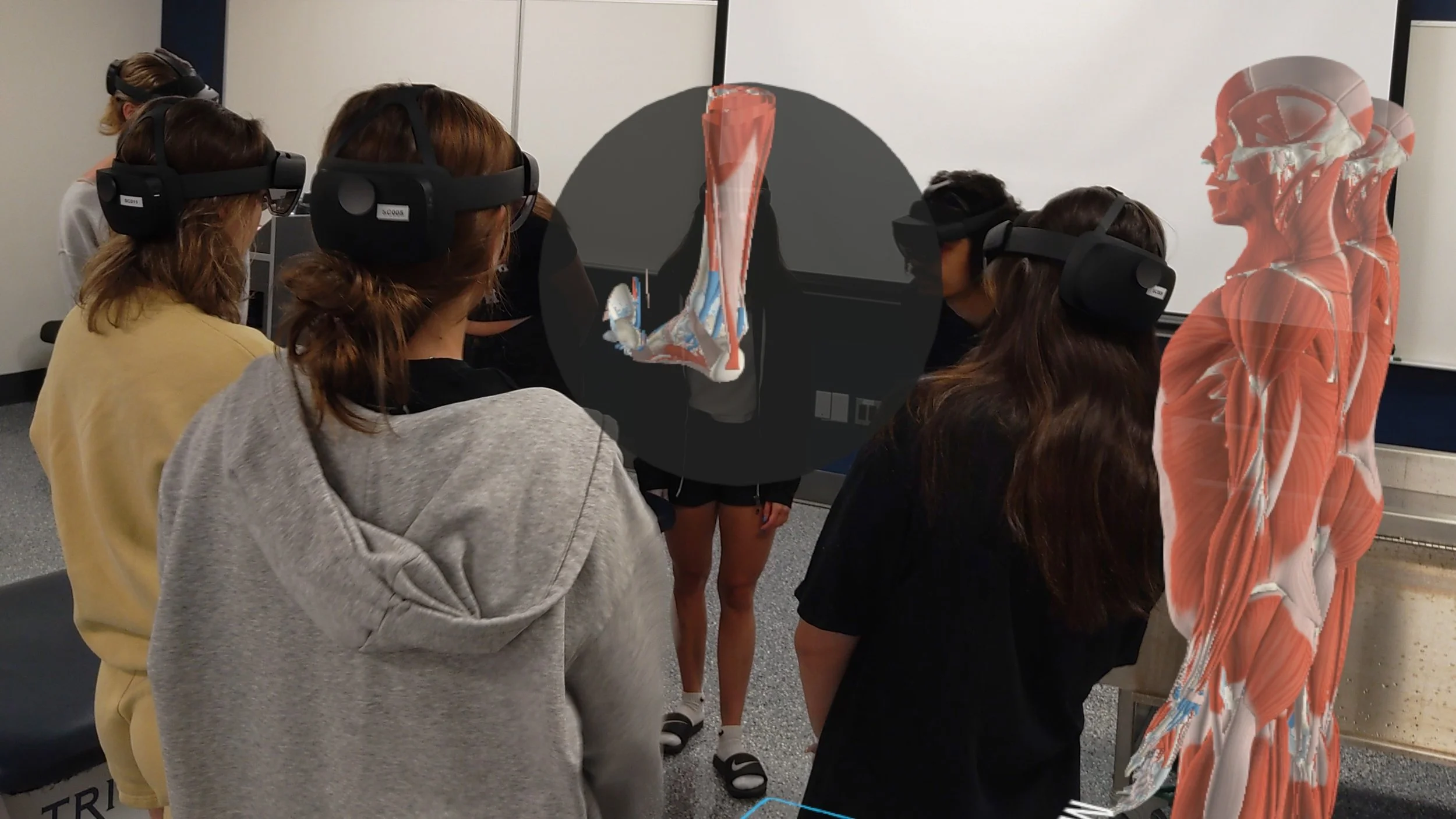
A Window into Sheridan College’s HoloAnatomy® Journey
Explore the transformative journey of Sheridan College as they integrate HoloAnatomy into their Kinesiology curriculum. Led by Dr. Joanne Hodder, this initiative leverages mixed reality to revolutionize anatomy education. The post details the impressive setup and implementation process, the immersive and interactive learning experiences provided to students, and the future plans to expand HoloAnatomy's use in other programs.


Case Study: Sheridan College Becomes First Canadian Institution to Reinvent Anatomy Education with HoloAnatomy Learning Platform
Sheridan College transformed anatomy and physiology education by integrating HoloAnatomy®, giving students immersive 3D anatomy models for deeper learning, engagement, and improved clinical readiness.

Universidad Del Norte
As always, the moment faculty and students put on the HoloLens, the room filled with sounds of amazement!

Notre Dame-Cathedral Latin
“I didn’t expect HoloAnatomy to be this amazing and easy to pick up!” —NDCL teacher Maureen Wahl

Partner Story: Sheridan College
When you first put on the lens, you're struck by the detail and the ability to engage with the model in front of you. It stimulates questions. It sparks intrigue. It enables you to customize what you’re looking at and switch to something else on a dime. And that level of flexibility—from a teaching and learning perspective—is the way of the future and ahead of its time.
Partner Story: A.T. Still University of Health Sciences
We feed off students’ excitement, and they were just oohing and ahhing. We had described HoloAnatomy to students. Of course, it’s not the same as putting the device on your head for the first time and seeing the models pop up in the room and being able to walk around them. We have this new space where we run lab sessions, a big open room with glass doors, and people walking by could witness the excitement of our students. It's a lot of fun. Our Dean came in and walked around and got to experience it. The HoloAnatomy experience creates a lot of joy and excitement at ATSU.

Cleveland's Saint Joseph Academy is the nation's first high school to use HoloAnatomy® software
Saint Joseph Academy is the first high school in the nation to utilize the HoloAnatomy Software suite. Anatomy lessons have taken on a new dimension. “We want to give them the best tools available,” said Saint Joseph Academy President Katheyn Purcell.
“It definitely makes it a lot easier to understand [anatomy] — and it's more fun as well,” said junior Elizabeth Krotine. “You get to interact with your classmates and discuss what you're seeing.”

Pioneers in Medical Education
“Thanks to this software, anatomy became one of my favorite and strongest subjects,” Ethan says. “HoloAnatomy makes learning about the human body more accessible—something that can be tackled even by someone who’s completely new to the rigors of the medical school curriculum.”